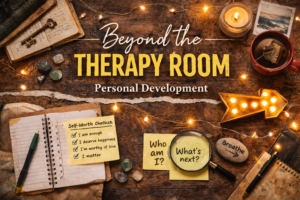
Healing doesn’t only happen inside a therapy session. Sometimes it happens in quiet moments afterwards – when something you learned begins to make sense, when you notice a thought differently, or when you try a small new step that once felt impossible.
Beyond the Therapy Room is a space created to support you in those moments.
Here you’ll find a growing collection of gentle resources designed to help you understand your mind, soothe your nervous system, and support your emotional wellbeing in everyday life. These include worksheets, self-reflection tools, guided exercises, short audios, and future courses — all created with the same care, compassion and psychological understanding that sits at the heart of therapy.
Take what feels helpful. Leave what doesn’t. Return whenever you need.
Click to download your Free Worksheet
Click to download your Free Guided Breathing Exercise
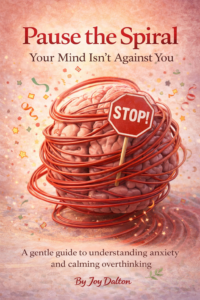
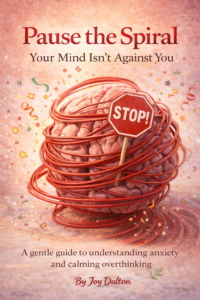
Click to Buy Now on Amazon
Wellbeing Toolkit
This free Wellbeing Toolkit has been created to help you better understand your thoughts, emotions and reactions, while introducing simple techniques that you can use in everyday life.
Whether you’re feeling anxious, overwhelmed, stressed or simply looking to improve your wellbeing, these resources offer practical strategies to help you pause, reflect and regain a sense of balance.
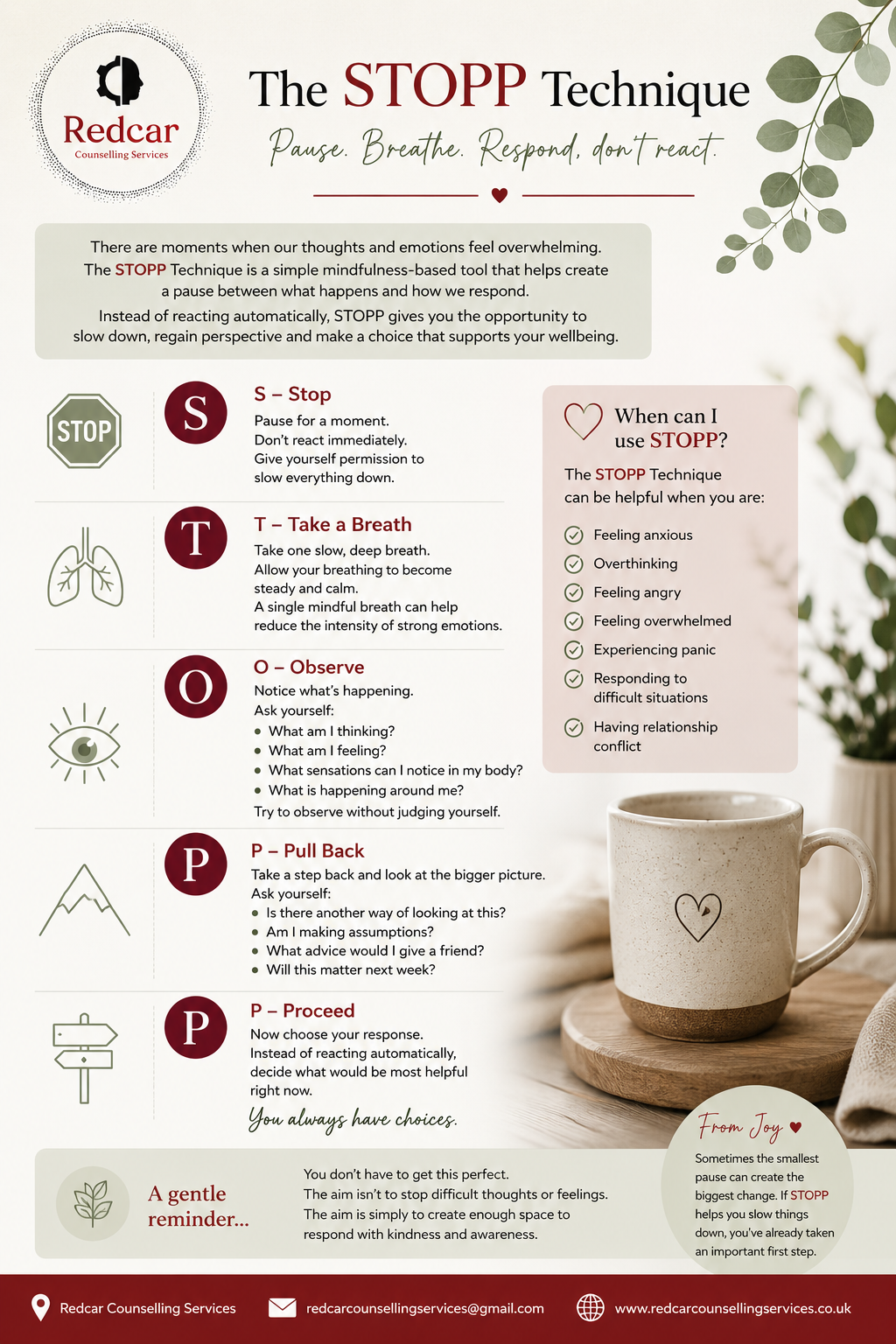
STOPP Technique Download
The STOPP Technique is a simple yet effective mindfulness tool that can help you manage overwhelming thoughts and emotions in the moment. By encouraging you to pause before reacting, STOPP creates space to slow down, gain perspective and respond more calmly to challenging situations.
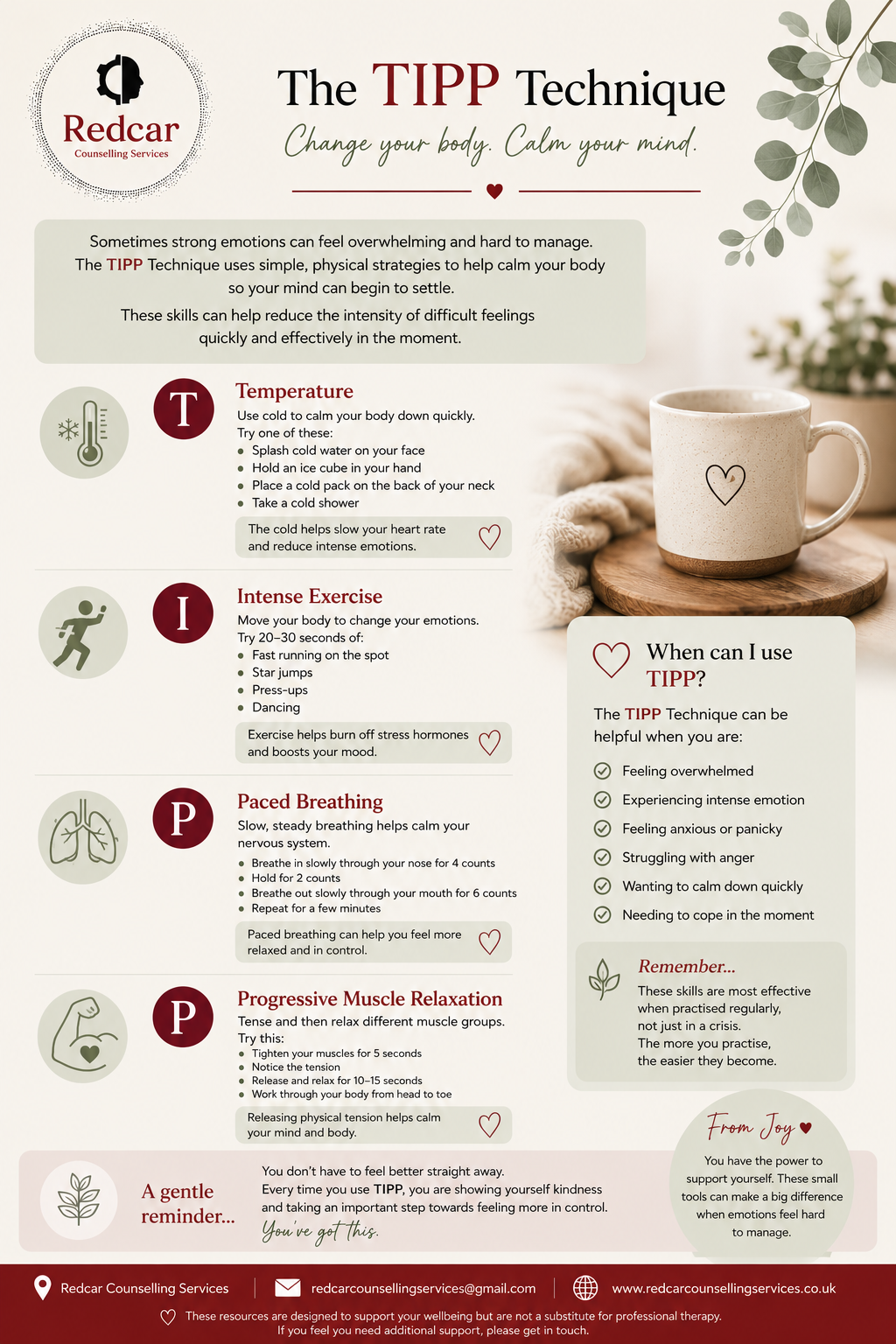
TIPP Technique Download
The TIPP Technique is a practical Dialectical Behaviour Therapy (DBT) skill designed to help reduce intense emotions quickly by calming your body’s stress response. Using simple techniques such as changing your body temperature, engaging in short bursts of exercise, paced breathing and progressive muscle relaxation, TIPP can help you feel more grounded and regain a sense of control.
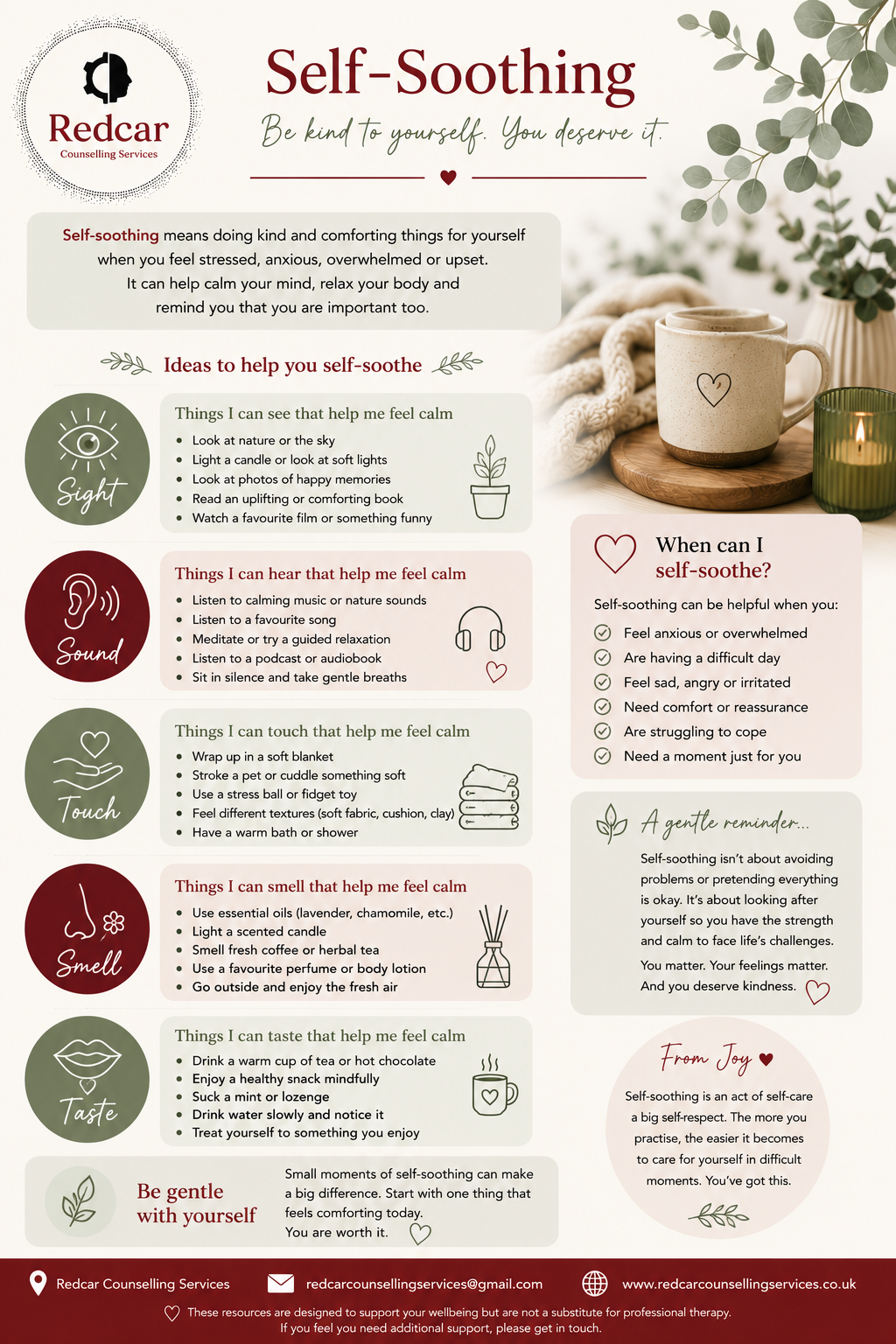
Self Soothing Technique Download
The Self-Soothing Technique is a gentle way of caring for yourself during times of stress, anxiety or emotional overwhelm. By using your five senses—sight, sound, touch, smell and taste—you can help calm your nervous system, reduce emotional intensity and bring yourself back to the present moment.
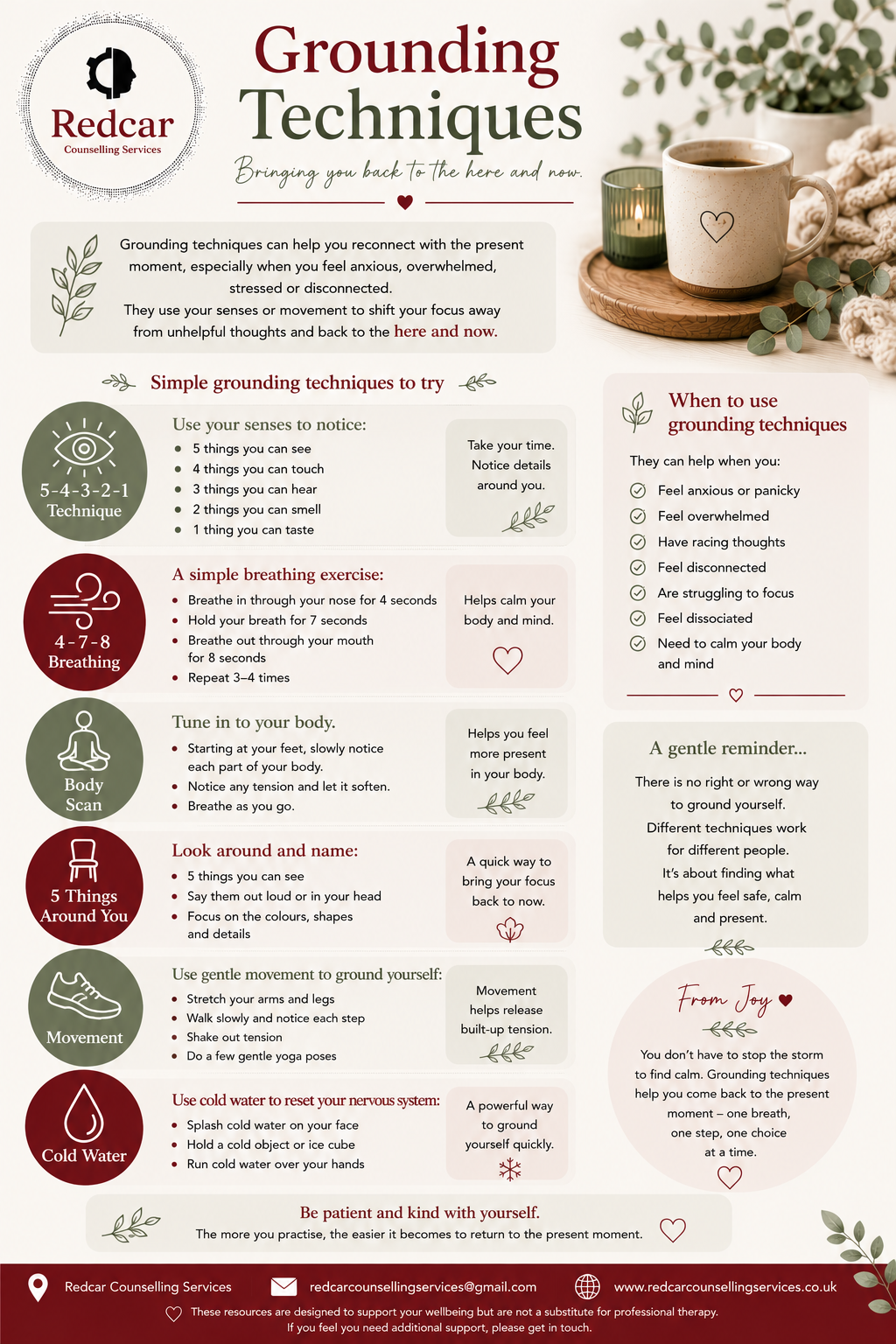
Grounding Technique Download
Grounding Techniques are simple, practical exercises that help bring your attention back to the present moment when your thoughts or emotions feel overwhelming. By focusing on your surroundings, your senses or your breathing, grounding can help reduce anxiety, manage stress and create a greater sense of calm.
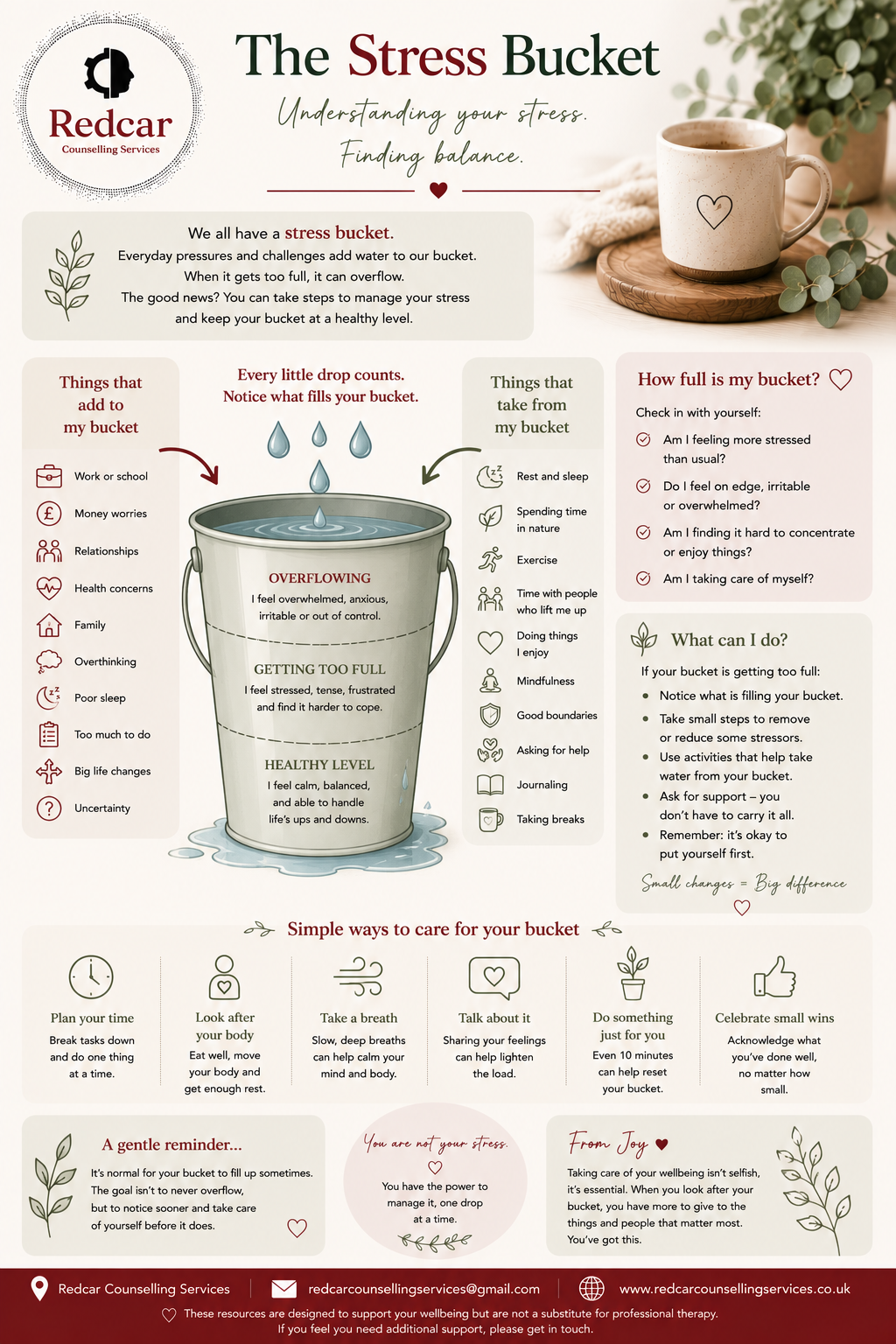
Stress Bucket Download
The Stress Bucket is a simple way of understanding how stress builds up over time. We all carry different pressures in our daily lives, and when too many stressors fill our “bucket,” it can begin to overflow. This may leave us feeling anxious, overwhelmed, irritable or emotionally exhausted.
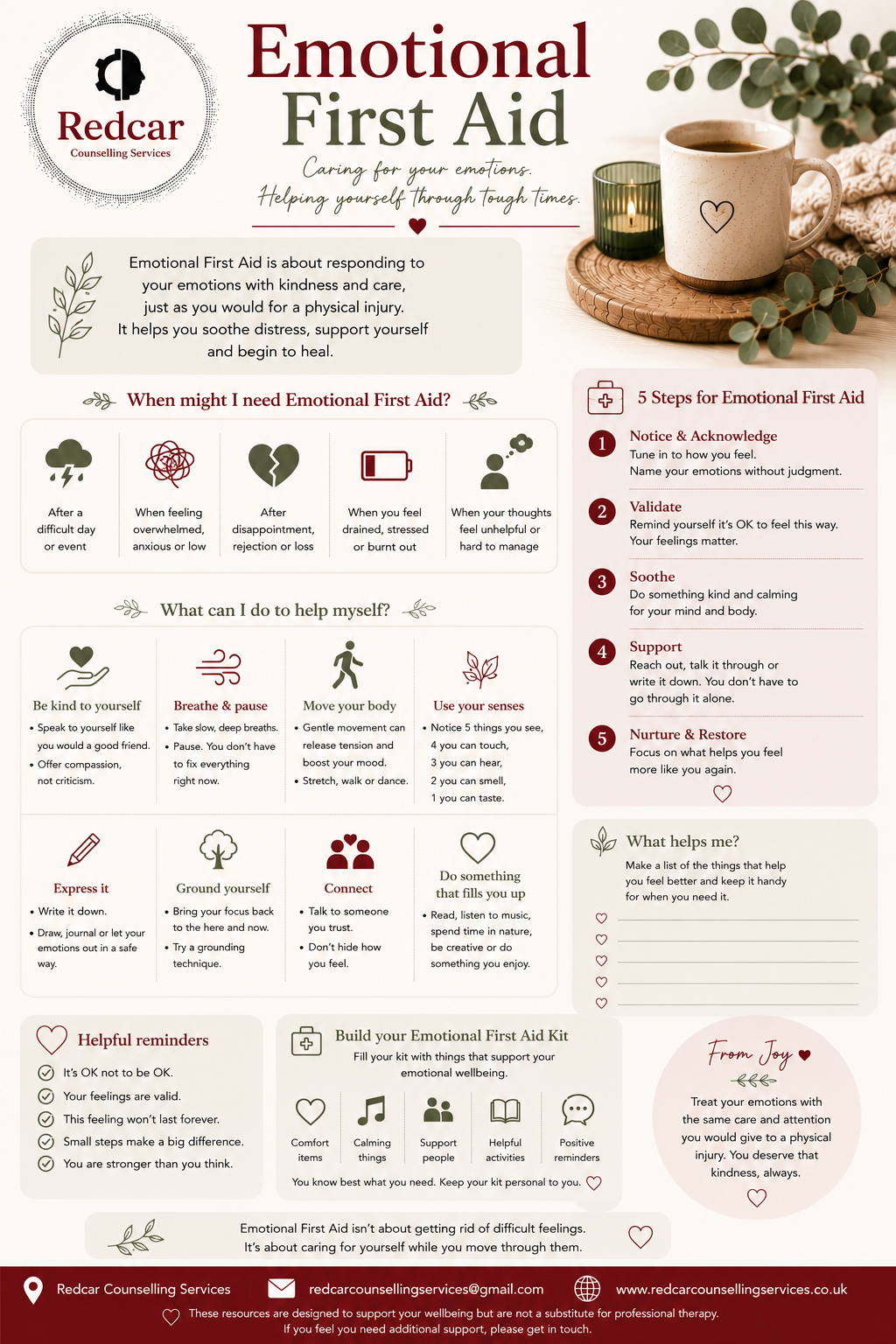
Emotional First Aid Download
Emotional First Aid is about recognising when you’re struggling emotionally and taking small, supportive steps to care for your mental wellbeing. Just as we provide first aid for physical injuries, it’s equally important to respond with kindness and practical strategies when we’re feeling stressed, overwhelmed or emotionally drained.
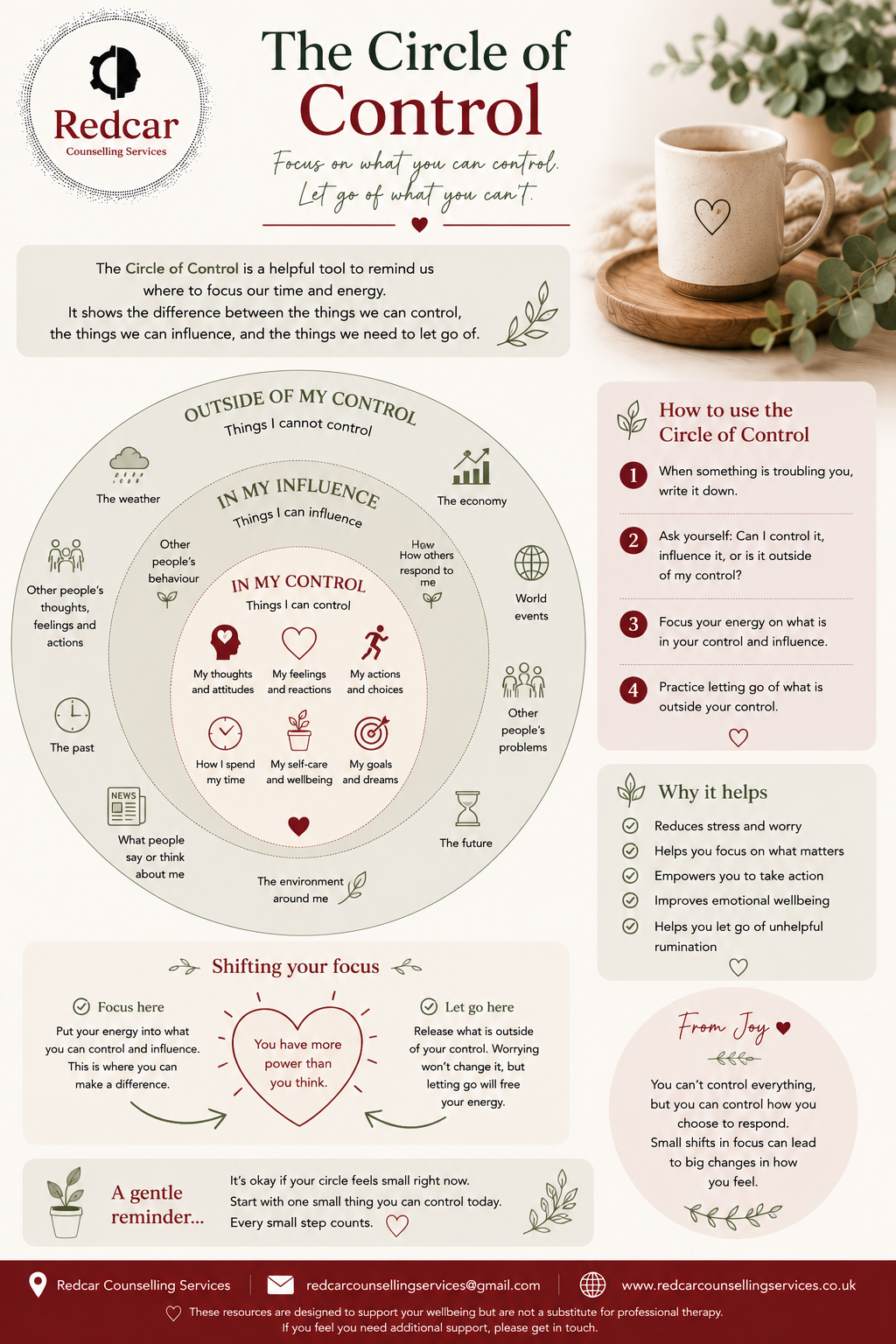
Circle of Control Download
The Circle of Control is a simple but powerful technique that helps you focus your energy on the things you can influence, rather than worrying about those you cannot. By recognising what is within your control and learning to let go of what isn’t, this exercise can help reduce stress, ease anxiety and improve emotional resilience.
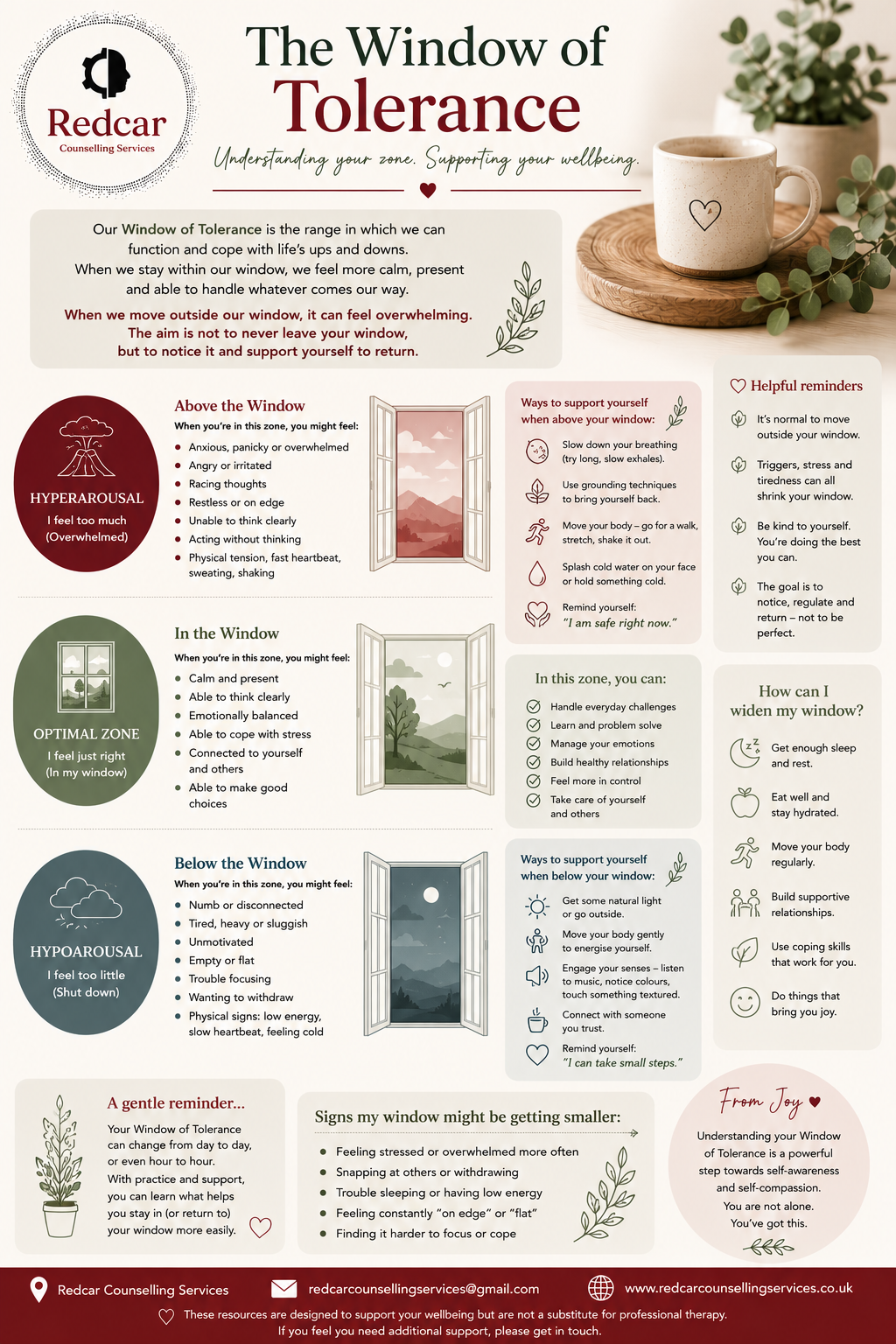
Windown of Tolerance Download
The Window of Tolerance is a helpful way of understanding how your nervous system responds to stress. When you’re within your “window,” you’re more likely to feel calm, balanced and able to cope with everyday challenges. However, when stress becomes overwhelming, you may move outside of this window and experience feelings of anxiety, panic, emotional overwhelm or, at the other end of the scale, numbness and disconnection.
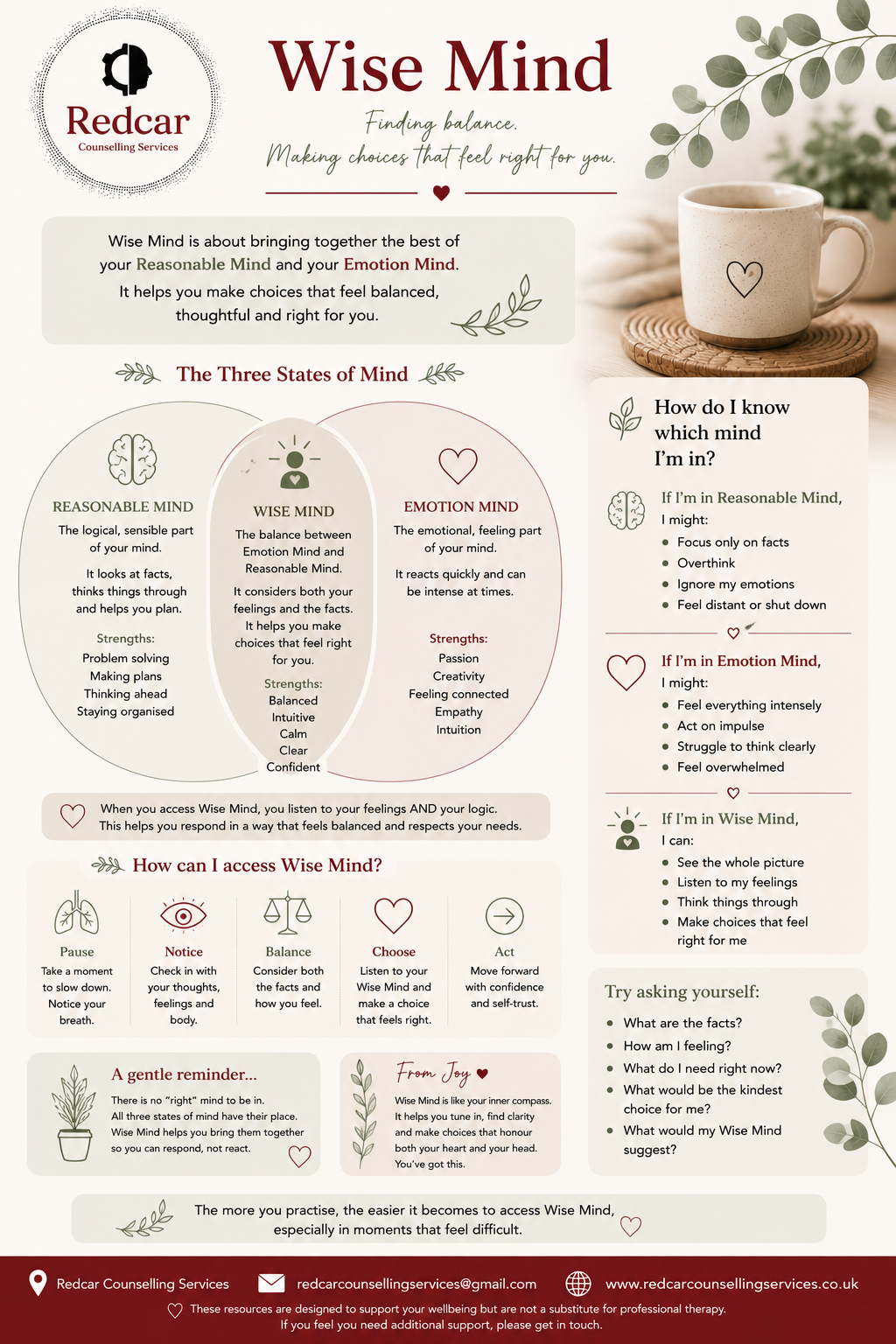
Wise Mind Download
The Wise Mind technique is a core skill in Dialectical Behaviour Therapy (DBT) that helps you find a healthy balance between your thoughts and your emotions. Rather than being guided purely by logic or strong feelings, Wise Mind encourages you to pause, reflect and make decisions from a place of calm, clarity and self-awareness.
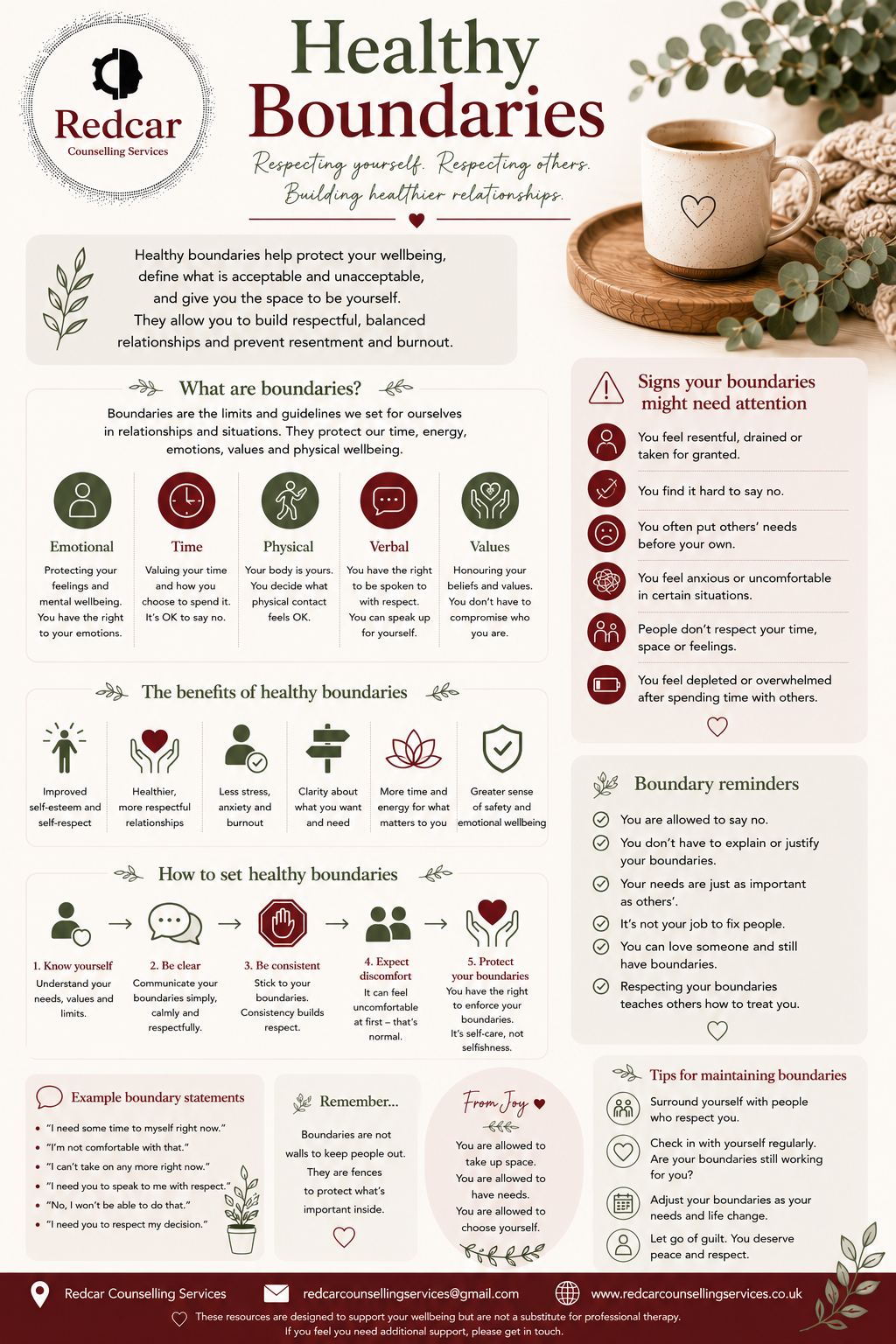
Healthy Boundaries Download
Healthy Boundaries are an important part of protecting your emotional wellbeing and maintaining positive, respectful relationships. Setting boundaries means recognising your own needs, values and limits, while communicating them clearly and confidently to others. Healthy boundaries are not about pushing people away—they’re about creating relationships that are built on mutual respect and understanding.